
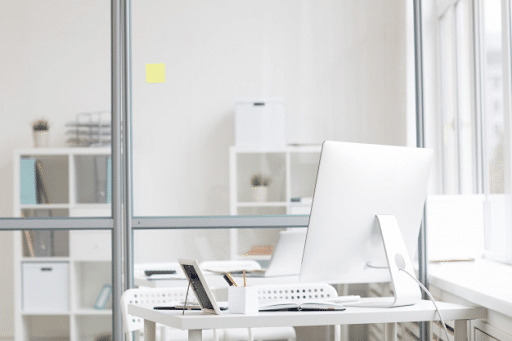
The corona crisis brought about a major haul to every aspect of our lives. Right from getting used to the radical lifestyle change to embracing the much-shoved work from home culture, the pandemic has definitely proved to be a one big game-changer.
While some businesses will still be operational by making their staff work from home, some are contemplating to reopen their office with limited staff. In such a scenario, employers will need to have plans in place to ensure the safety of their employees. If you are contemplating to resume office operations soon, here are few things you need to pay attention to.
1. Overhauling existing office furniture
Since employees would be spending a considerable amount of time in the office once it resumes, overhauling the existing office furniture should be the top priority for business owners. Companies should consider rearranging the furniture keeping health guidelines in mind. They will also have to introduce certain equipment barriers such as aluminum or melamine dividers, cough and sneeze protection shields, walls, desk shields etc. to prevent the influx of droplets and microbes.
There should be a minimum six-foot distance between the employee’s desks. Movable/foldable dividers or barriers can be installed to enforce one-way traffic. This will prevent employees from making unnecessary contact. Desks, floorings, shields, doors, handles, common areas or shared items should be cleaned more frequently.
2. Turn communal rooms into workspaces
Most offices have conference rooms, employee lounges, leisure areas, cafeterias or communal spaces, which are likely to remain unused for a long time to comply with social distancing norms. Instead of shutting these rooms entirely, use them as temporary workspaces so that your staff can spread out!
3. Promote good hygiene
Though the importance of maintaining good hygiene cannot be emphasized more in current times, employers need to ensure hand sanitizers are placed on every desk and around rooms such as an entrance area, reception counters, leisure rooms, conference rooms etc. Issue guidelines for maintaining office hygiene as this will make employees and visitors follow them thoroughly.
4. Follow staggered shifts schedules
Working in staggered shifts schedules will make it easier for businesses to create distance between employees. Employees whose presence is an absolute must should be asked to work from office while for rest others remote or a mixture of remote and onsite work should be encouraged. All sort of communal activities such as team lunches, breakfasts or leisurely activities where colleagues are required to gather should be put on hold.
5. Bring those cubicles back
Cubicles, which were once considered the glory of an office, especially in the past decade, fell out in favor of open-office designs. However, with this pandemic, cubicles will make their way back into the office. Businesses can opt for cubicles made from glass to ensure visibility to employees.
6. Controls at the reception area
Until the coronavirus pandemic happened, the reception area was considered as the place where visitors, clients or customers were greeted by the admin staff. The visitors would relax in the lounge area and could meet the employee they were scheduled to meet. However, this practice may not continue further and visitors may probably be required to get their temperature checked at the door, remove the shoes and sanitize their hands before entering the office area.
Related Posts
In today’s dynamic workplace landscape, the concept of space extends beyond mere utility. Employees crave environments where they can collaborate freely, yet retain pockets of
As offices continue adapting to post-pandemic realities, 2025–26 brings a paradigm where workplaces are not just functional—they inspire, support, and evolve alongside employees. Today’s leading
In today’s dynamic work environment, adaptability and efficiency are paramount. Traditional office layouts, characterized by permanent walls and fixed spaces, often fall short in meeting